

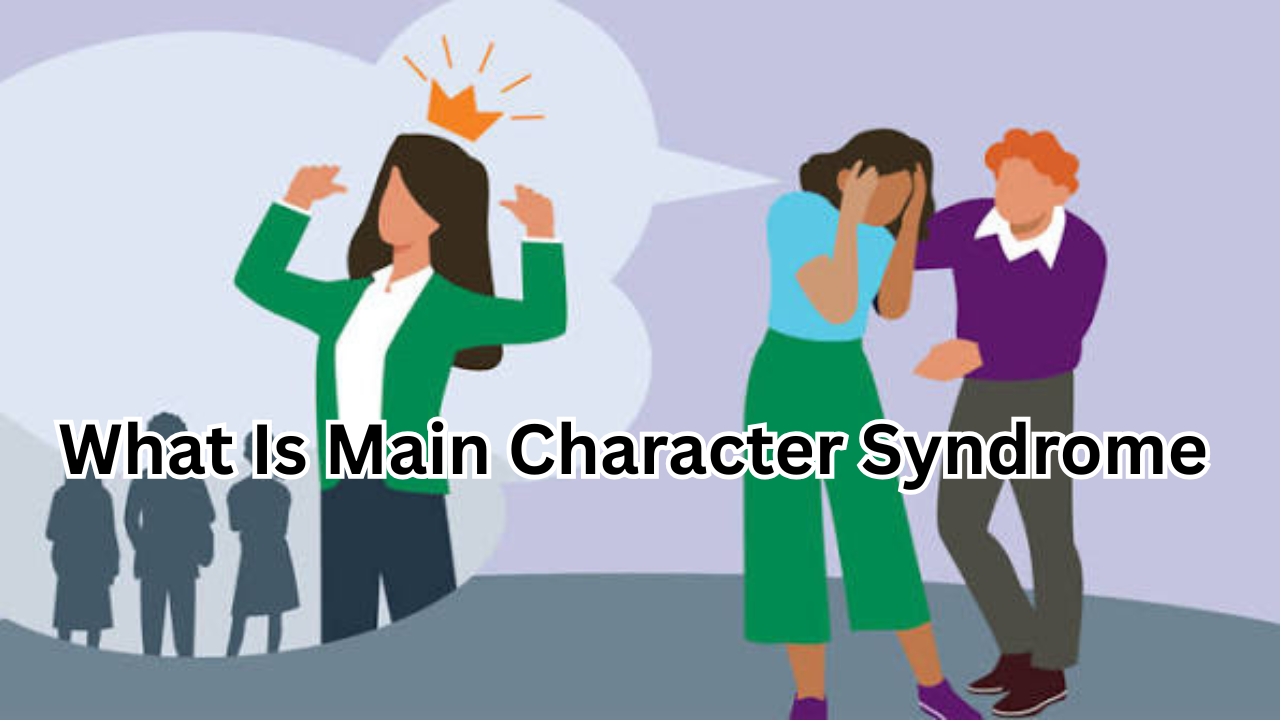
Have you ever felt like your life is a movie and everyone around you is simply part of the story? Maybe you imagine dramatic moments as scenes, think about how other people perceive you, or feel that your experiences deserve a bigger spotlight.
If so, you may have come across the phrase main character syndrome.
The term has become increasingly popular on social media, especially on TikTok, Instagram, and other platforms where people talk about confidence, self-improvement, relationships, and personal identity. Despite the word “syndrome,” main character syndrome is not a recognized medical or psychological diagnosis. It is an informal expression used to describe a pattern of thinking in which someone views themselves as the central character in their life story, sometimes to the point of overlooking other people’s perspectives.
But is being the “main character” always a bad thing? Not necessarily.
There is a healthy side to taking ownership of your life. Problems can arise when self-confidence turns into self-importance, or when someone begins treating other people as supporting characters rather than individuals with their own feelings, needs, and experiences.
Understanding the difference can help you develop confidence without losing empathy.
What Is Main Character Syndrome?
Main character syndrome is a popular, non-clinical term describing the tendency to view your own life as though you are the central character in a movie, television show, or novel.
Someone who identifies with this idea may pay considerable attention to their appearance, experiences, personal narrative, or how their life looks to others. They may imagine ordinary events as meaningful scenes or feel strongly that their life should have a particular storyline.
The phrase is often used humorously online, but it can also describe more serious behavior.
For example, enjoying a solo coffee while listening to music and feeling confident about your life is not automatically a problem. In contrast, constantly needing attention, expecting others to revolve around you, or dismissing other people’s feelings can create difficulties in relationships.
The key issue is balance.
Having a strong sense of self can be healthy. Assuming you are the only person whose story matters is something different.
Is Main Character Syndrome a Real Mental Health Condition?
No. Main character syndrome is not an official psychiatric diagnosis.
The phrase is internet slang rather than a clinical term found in standard diagnostic manuals. It should therefore not be used to diagnose yourself or someone else with a mental health disorder.
Some behaviors associated with the expression can overlap with traits seen in other psychological patterns, including excessive self-focus, attention-seeking behavior, or difficulties with empathy. However, noticing one or two of these behaviors does not mean someone has a personality disorder or another mental health condition.
A proper diagnosis requires a qualified mental health professional to consider a person’s broader history, behavior, functioning, and circumstances.
This distinction is important because social media often turns complex psychological concepts into simple labels.

Common Signs of Main Character Syndrome
Because main character syndrome is not a formal condition, there is no official checklist of symptoms. However, people commonly use the phrase to describe certain patterns of behavior.
1. Constantly Seeing Yourself at the Center
You may naturally interpret situations primarily through your own experiences.
For instance, when something happens in a group, your first thought might be how it affects you rather than considering what others are experiencing.
Everyone does this occasionally. The concern is when it becomes a consistent pattern.
2. Wanting Your Life to Feel Like a Story
Some people enjoy creating a narrative around their everyday experiences.
They might imagine certain conversations as movie scenes, romanticize ordinary activities, or feel disappointed when real life does not match the exciting story they have imagined.
There is nothing inherently wrong with enjoying this perspective. Imagination can make everyday life more enjoyable. It becomes less helpful when reality constantly feels inadequate because it does not provide enough drama.
3. Seeking Attention or Validation
Another commonly associated behavior is a strong desire to be noticed.
This might appear as:
- Frequently posting content mainly for validation
- Feeling uncomfortable when attention shifts to someone else
- Expecting compliments or recognition
- Becoming upset when achievements are not acknowledged
- Comparing your life with other people’s lives online
Wanting recognition is normal. Humans naturally seek social approval. The difference lies in how strongly your self-worth depends on it.
4. Comparing Your Life With Other People’s Stories
Social media can make comparison particularly tempting.
You might see someone’s vacation, relationship, career success, or lifestyle and wonder why your own life does not look equally exciting.
The problem is that social media usually shows selected moments rather than someone’s complete reality.
Constant comparison can create unrealistic expectations about what life is supposed to look like.
5. Difficulty Considering Other Perspectives
A stronger form of self-centered thinking can make it difficult to understand how situations affect other people.
You may assume that your interpretation is automatically correct or struggle to recognize that someone else could experience the same situation completely differently.
Empathy is an important counterbalance to self-focus.
6. Expecting Life to Follow a Script
Some people develop strong expectations about how their lives should unfold.
They may believe they should have a particular relationship, career, social status, or lifestyle by a certain age. When reality takes a different direction, they can feel unusually disappointed.
Life rarely follows a perfect script.
Learning to adapt when circumstances change is an important part of emotional maturity.
Healthy Main Character Energy vs. Unhealthy Self-Centeredness
The phrase “main character energy” is often used positively. It can describe confidence, independence, and the decision to stop living entirely according to other people’s expectations.
The distinction is worth understanding.
| Healthy Main Character Energy | Unhealthy Self-Focus |
|---|---|
| Taking responsibility for your life | Blaming others for everything |
| Building confidence | Needing constant admiration |
| Enjoying your individuality | Believing you are superior |
| Setting personal goals | Expecting everyone to support your goals |
| Enjoying your own company | Isolating yourself because others “don’t understand” |
| Expressing yourself | Making every situation about yourself |
| Appreciating your progress | Constantly comparing yourself with others |
| Having boundaries | Ignoring other people’s boundaries |
| Being ambitious | Treating people as tools for success |
| Enjoying life’s small moments | Becoming frustrated when life is not exciting enough |
The goal isn’t to make yourself smaller. Instead, it is to develop a strong sense of identity while remembering that everyone around you has a story too.
What Causes Main Character Syndrome?
There is no single cause because the term itself is not a clinical diagnosis.
However, several modern influences may encourage excessive self-focus.
Social Media
Social media platforms encourage people to create personal narratives. Users choose photographs, captions, videos, music, and locations that communicate a particular version of themselves.
Over time, it can become easy to think of life as something that needs to be constantly documented or presented.
Algorithms can also reinforce comparison by repeatedly showing highly polished versions of other people’s lives.
The Desire for Control
Viewing yourself as the protagonist can create a feeling of control.
If you believe your life has a clear storyline, uncertainty may feel easier to manage. Real life, however, contains unexpected events, disappointments, and circumstances that cannot always be controlled.
Low Self-Esteem
Interestingly, excessive self-focus does not always come from genuine confidence.
Sometimes, constantly thinking about how you appear to others can reflect insecurity. A person may depend heavily on external approval because they are uncertain about their own value.
Romanticized Ideas About Life
Movies, television shows, books, music, and social media can influence expectations about relationships and personal success.
Real life tends to be much less dramatic and predictable.
There are ordinary days, awkward conversations, boring responsibilities, unexpected setbacks, and gradual progress. That does not make life less meaningful.
How Main Character Thinking Can Affect Relationships
Relationships require mutual attention.
If someone constantly expects to be the center of attention, friends, partners, coworkers, or family members may eventually feel ignored or unappreciated.
For example, imagine a friend sharing exciting news. If your immediate response is to redirect the conversation toward your own experience, the other person may feel that their moment was taken away.
Small patterns like this can accumulate.
Healthy relationships involve:
- Listening without immediately making the conversation about yourself
- Celebrating other people’s achievements
- Respecting boundaries
- Accepting criticism without automatically becoming defensive
- Asking questions about other people’s experiences
- Recognizing when someone needs support rather than attention
Being the main character in your own life does not mean you have to be the main character in everybody else’s.
How to Stop Main Character Syndrome From Becoming a Problem
If you recognize some of these tendencies in yourself, there is no reason to panic.
Self-awareness is already a useful first step.
Practice Perspective-Taking
Before reacting to a situation, ask yourself:
“How might this look from the other person’s point of view?”
You do not have to agree with their perspective. Simply considering it can make your responses more thoughtful.
Spend Less Time Comparing Online
If social media consistently makes you feel that your life is boring or unsuccessful, consider reducing your exposure.
You can also unfollow accounts that trigger constant comparison and spend more time engaging with content that genuinely interests you.
Learn to Enjoy Ordinary Moments
Not every day needs to be exciting.
A quiet morning, a routine workout, cooking dinner, reading a book, or talking with a friend can be meaningful without becoming a dramatic life event.
A fulfilling life is often built from ordinary moments repeated over time.
Listen More
Try giving people your full attention during conversations.
Instead of immediately thinking about what you will say next, focus on understanding what the other person is actually communicating.
Good listening can strengthen relationships and naturally reduce excessive self-focus.
Build Internal Confidence
Confidence becomes healthier when it does not depend entirely on other people’s reactions.
Consider asking yourself:
- What do I value?
- What kind of person do I want to become?
- What accomplishments matter to me personally?
- Which goals would I pursue even without public recognition?
These questions shift attention from performance to personal values.
When Should You Seek Professional Support?
Having “main character energy” is not itself a reason to seek therapy.
However, talking with a qualified mental health professional may be useful if persistent self-focused behavior is causing significant problems in your relationships, work, emotional well-being, or daily life.
Professional support can help you explore the underlying reasons for certain patterns without relying on internet labels.
It is also important not to diagnose friends, partners, family members, or coworkers based on social media terminology. A few attention-seeking behaviors do not provide enough information to determine someone’s psychological condition.
Frequently Asked Questions

Is main character syndrome a real diagnosis?
No. Main character syndrome is an informal internet phrase rather than a recognized mental health diagnosis. It is generally used to describe excessive self-focus or the tendency to view one’s life as a story centered primarily around oneself.
Is having main character energy bad?
Not necessarily. Healthy main character energy can mean confidence, independence, self-expression, and taking responsibility for your own life. It becomes problematic when self-focus consistently interferes with empathy, relationships, or respect for other people.
Why is main character syndrome popular on social media?
Social media encourages users to create and share personal narratives. Photos, videos, captions, music, and lifestyle content can make everyday experiences feel like curated stories. This environment has helped popularize phrases such as “main character energy” and “main character syndrome.”
Can main character syndrome affect relationships?
It can if self-focus becomes excessive. Someone who constantly redirects conversations toward themselves, needs continuous attention, or ignores other people’s feelings may eventually create tension in friendships, romantic relationships, or family interactions.
How can I tell if I am too self-centered?
Consider how often you listen to others, celebrate their successes, accept criticism, respect boundaries, and consider perspectives different from your own. If people repeatedly tell you that they feel ignored or dismissed, it may be worth reflecting on your behavior.
Is main character syndrome the same as narcissism?
No. The terms should not be treated as interchangeable. Main character syndrome is informal internet language, while narcissistic personality disorder is a recognized mental health diagnosis with specific diagnostic criteria. Feeling confident, enjoying attention, or occasionally making situations about yourself does not automatically mean you are narcissistic.
Final Thoughts
So, what is main character syndrome?
At its simplest, it is a popular phrase for viewing yourself as the central character of your own life, sometimes with an excessive focus on your experiences, image, or personal storyline. It is not a formal mental health condition, and the phrase should not be used as a substitute for professional diagnosis.
There is, however, a valuable idea hidden inside the trend.
You should care about your life. You should have goals, build confidence, enjoy your individuality, and make choices that reflect your values. You are allowed to take up space and create a life that feels meaningful to you.
At the same time, everyone around you is living a story of their own.
The healthiest approach is not to stop being the main character of your life. It is to remember that you are the main character in your story while other people remain the main characters in theirs. That balance between self-confidence and empathy can lead to stronger relationships, better self-awareness, and a more grounded view of everyday life.
Also Read : What Is Padlet? A Complete Guide to the Visual Collaboration Platform











Leave a Reply