

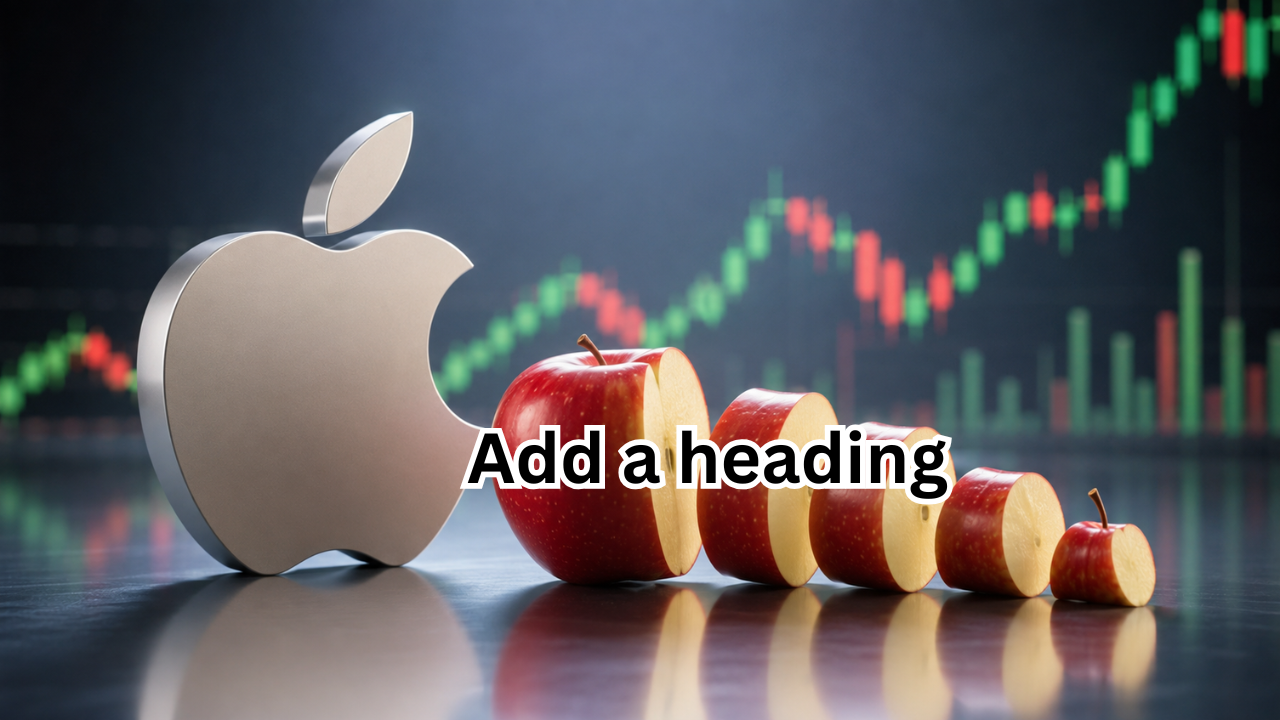
If you have searched for apple split, you are probably wondering when Apple split its stock, how many times it has happened, and what a stock split actually means for investors. Apple Inc. has become one of the world’s most closely watched companies, and its stock-split history is an important part of its journey as a public company.
Apple has completed five stock splits since its initial public offering in 1980. These occurred in 1987, 2000, 2005, 2014, and most recently in 2020. Apple’s investor-relations information confirms that the company completed a 4-for-1 split in 2020 and a 7-for-1 split in 2014, along with three earlier 2-for-1 splits.
But what does an Apple stock split actually do? Does it make the company more valuable? Does an investor’s money increase automatically? And should a possible future split influence an investment decision?
This guide explains the Apple split in simple terms and covers its history, how each split worked, why companies split their shares, and what investors should understand before making decisions.
What Is an Apple Stock Split?
An Apple stock split is a corporate action that increases the number of outstanding shares while proportionally reducing the price of each individual share.
For example, imagine an investor owns one Apple share worth $400. If Apple announces a 4-for-1 split, that one share becomes four shares. The theoretical price per share becomes approximately $100.
The investor still owns $400 worth of Apple stock immediately after the split, assuming the market price does not move for another reason.
In other words, a stock split changes the number of shares and the price per share, but it does not automatically change the underlying value of the investor’s position.
Apple’s 2020 split is a good example. The company completed a 4-for-1 stock split, meaning each existing share was divided into four shares.

Apple Split History
Apple has split its stock five times since going public. The company’s official investor-relations FAQ lists the following history.
| Split Date | Split Ratio | What Happened |
|---|---|---|
| June 16, 1987 | 2-for-1 | Each share became 2 shares |
| June 21, 2000 | 2-for-1 | Each share became 2 shares |
| February 28, 2005 | 2-for-1 | Each share became 2 shares |
| June 9, 2014 | 7-for-1 | Each share became 7 shares |
| August 28, 2020 | 4-for-1 | Each share became 4 shares |
Apple’s dividend history also records the 1987, 2000, 2005, 2014, and 2020 stock-split events.
Apple’s 1987 Stock Split
Apple’s first stock split after its IPO took place in 1987. The company completed a 2-for-1 split on June 16.
This meant shareholders received two shares for every one share they owned. The total market value of their position was adjusted accordingly.
Apple’s 2000 Stock Split
More than a decade later, Apple completed another 2-for-1 stock split on June 21, 2000.
The split came during a period when technology stocks were attracting considerable investor attention. As with any standard stock split, the number of shares increased while the price per share was adjusted.
Apple’s 2005 Stock Split
Apple completed its third 2-for-1 stock split on February 28, 2005.
By this point, Apple’s business had changed dramatically from its earlier years. Products such as the iPod were helping the company attract a much broader consumer audience.
Apple’s 2014 7-for-1 Stock Split
The 2014 Apple split was much larger than its previous 2-for-1 splits.
Apple announced a 7-for-1 stock split, with split-adjusted trading beginning June 9, 2014. Apple stated that shareholders of record would receive six additional shares for every share they owned.
For example, someone who owned 10 shares before the split would have received 70 shares after the split, subject to the applicable record-date rules.
The total value did not automatically become seven times larger. Instead, the share count increased while the per-share price was adjusted.
Apple’s 2020 4-for-1 Stock Split
The most recent Apple split occurred in 2020.
Apple announced a 4-for-1 split in July 2020. Shareholders of record as of August 24, 2020 received three additional shares for every share they already owned. Trading on a split-adjusted basis began on August 31.
Apple’s SEC filing confirms that the company effected the 4-for-1 split on August 28, 2020.
This is the latest completed Apple stock split as of 2026.
Why Does Apple Split Its Stock?
A stock split does not change the underlying business overnight. So why would a company like Apple do it?
One reason is share-price accessibility.
When a company’s stock price rises substantially, some investors may perceive individual shares as expensive even though fractional shares may be available through many modern brokerages. A lower nominal share price can make the stock appear more accessible to a wider group of investors.
Apple explicitly said in 2020 that the split was intended to make its stock more accessible to a broader base of investors.
Other potential reasons include:
- Making the per-share price easier for investors to manage
- Increasing perceived accessibility
- Maintaining a share price range that management considers appropriate
- Creating flexibility for employee equity programs
- Improving the psychological appeal of the stock to some investors
However, a lower share price should not be confused with a cheaper company.
Does an Apple Split Increase Your Investment?
No, not automatically.
Suppose you own 20 Apple shares at a hypothetical price of $200 per share. Your position is worth $4,000.
If Apple completes a 4-for-1 split, you would have 80 shares. The theoretical split-adjusted price would be $50 per share.
Your position would still be worth approximately $4,000 immediately after the split, assuming there is no other market movement.
The basic calculation is:
Before split:
20 shares × $200 = $4,000
After 4-for-1 split:
80 shares × $50 = $4,000
The important point is that a stock split is not the same thing as receiving free money.
Does an Apple Split Make the Stock Cheaper?
It makes the individual share price lower, but it does not necessarily make Apple cheaper from a valuation perspective.
This distinction is extremely important.
Imagine two companies:
- Company A has 1 million shares worth $100 each.
- Company B has 10 million shares worth $10 each.
Company B’s stock is not automatically cheaper simply because its individual shares cost less. The total number of shares outstanding also matters.
Investors should therefore look at factors such as earnings, revenue, cash flow, valuation, growth expectations, and the company’s competitive position rather than focusing only on the share price.
Apple Split and Long-Term Investors
For long-term investors, the most important question is usually not whether Apple will split again.
The bigger question is whether the company can continue creating value over time.
A stock split does not directly improve:
- Apple’s revenue
- Apple’s profit margin
- Its product quality
- Its customer base
- Its cash flow
- Its competitive position
A split simply changes the structure of the shares.
That said, splits can attract additional attention to a company. Increased investor interest can sometimes affect trading activity, although future stock performance is never guaranteed.
What Happens to Your Cost Basis After an Apple Split?
A stock split also affects the calculation of your cost basis per share.
Suppose you purchased 10 Apple shares for $1,000 total. Your original cost basis is $100 per share.
After a 4-for-1 split, you would have 40 shares, but your total cost basis remains $1,000.
Your adjusted cost basis becomes:
$1,000 ÷ 40 = $25 per share
This matters when calculating gains or losses if you later sell your shares.
Brokerages generally adjust account records for stock splits, but investors should still keep accurate transaction records, particularly for older holdings.
Does Apple Have a Future Stock Split Planned?
As of the latest official information available for this article, Apple’s most recent completed stock split was the 4-for-1 split in 2020. Apple’s official investor-relations FAQ lists five completed splits since its 1980 IPO.
A future split should not be assumed simply because Apple’s stock price rises.
Stock splits require corporate action and an official announcement. Investors should rely on Apple’s investor-relations communications and regulatory filings rather than social-media rumors or speculative headlines.
If Apple announces another split in the future, the important details will include:
- The split ratio
- Record date
- Effective date
- Ex-split trading date
- Eligibility requirements
- Any relevant shareholder information
Apple Split vs. Reverse Stock Split
An ordinary Apple stock split should not be confused with a reverse stock split.
In a regular stock split, the number of shares increases and the price per share decreases proportionally.
In a reverse stock split, the number of shares decreases while the price per share increases proportionally.
For example:
4-for-1 split:
1 share → 4 shares
1-for-4 reverse split:
4 shares → 1 share
Apple’s five historical splits have been regular stock splits, not reverse stock splits.
How Apple Splits Affect Dividends
Stock splits can also affect the dividend amount shown on a per-share basis.
This is because the number of shares changes. If a dividend is adjusted consistently with a stock split, the dividend per individual share can decrease while the investor’s overall dividend economics remain proportionate.
Apple’s official dividend history identifies its stock-split events alongside its dividend records, including the 2014 and 2020 splits.
This is another reason investors should be careful when comparing historical per-share dividend amounts across different periods.

Common Apple Split Mistakes Investors Make
Searching for apple split information can lead to several common misunderstandings.
Mistake 1: Assuming a Split Creates Value
A stock split does not instantly increase the economic value of the company.
Mistake 2: Looking Only at Share Price
A $50 stock is not necessarily cheaper than a $500 stock. Market capitalization and valuation are more meaningful measures.
Mistake 3: Believing Every Split Predicts a Price Increase
Apple has historically delivered strong long-term performance, but that does not mean every stock split guarantees future gains.
Mistake 4: Ignoring the Adjusted Cost Basis
Investors who hold shares across multiple splits need to account for the changing number of shares and adjusted per-share cost.
Mistake 5: Trusting Unconfirmed Split Rumors
A rumored Apple split is not the same as an officially announced corporate action. Always check Apple’s investor-relations information and regulatory filings.
Frequently Asked Questions About Apple Split
How many times has Apple split its stock?
Apple has split its stock five times since its 1980 IPO: three 2-for-1 splits, one 7-for-1 split, and one 4-for-1 split.
When was the last Apple stock split?
The most recent completed Apple split was a 4-for-1 stock split in 2020. Apple effected the split on August 28, 2020, with split-adjusted trading beginning August 31.
What was Apple’s biggest stock split?
Apple’s largest split by ratio was the 7-for-1 stock split in 2014. Each share became seven shares.
Does an Apple stock split make investors richer?
Not immediately. A stock split increases the number of shares and proportionally decreases the price per share. The total value of the position remains approximately the same immediately after the split, before normal market movements.
Will Apple split its stock again?
There is no basis for assuming that Apple will automatically split its stock again. A future split would require an official announcement from the company. Investors should avoid treating speculation as confirmation.
Is an Apple stock split good for investors?
A split can make individual shares appear more accessible, but the split itself does not improve Apple’s underlying business. Investors should evaluate the company’s financial performance, valuation, risks, and long-term prospects rather than buying solely because of a split.
Final Thoughts
The history of the Apple split shows how dramatically Apple’s share structure has changed over the decades. Since its IPO, Apple has completed five stock splits, including the notable 7-for-1 split in 2014 and the 4-for-1 split in 2020.
For investors, the most important lesson is simple: a stock split changes the number of shares, not the underlying value of the business by itself.
If Apple announces another split in the future, investors should look beyond the headline. Consider the company’s earnings, growth, valuation, products, services, cash generation, and broader market conditions.
Understanding how stock splits work can help investors avoid common mistakes and interpret Apple’s share-price history more accurately. Whether you are researching Apple’s past performance or watching for a future corporate action, the best approach is to focus on the business behind the ticker rather than the number printed next to a single share.
Note: This article is for informational purposes only and should not be considered financial or investment advice. Stock prices and corporate actions can change, so investors should verify current information through official company and regulatory sources before making financial decisions.
Also Read : DC Pride Parade 2026: Date, Route, Events, What to Expect, and Visitor Guide











Leave a Reply