

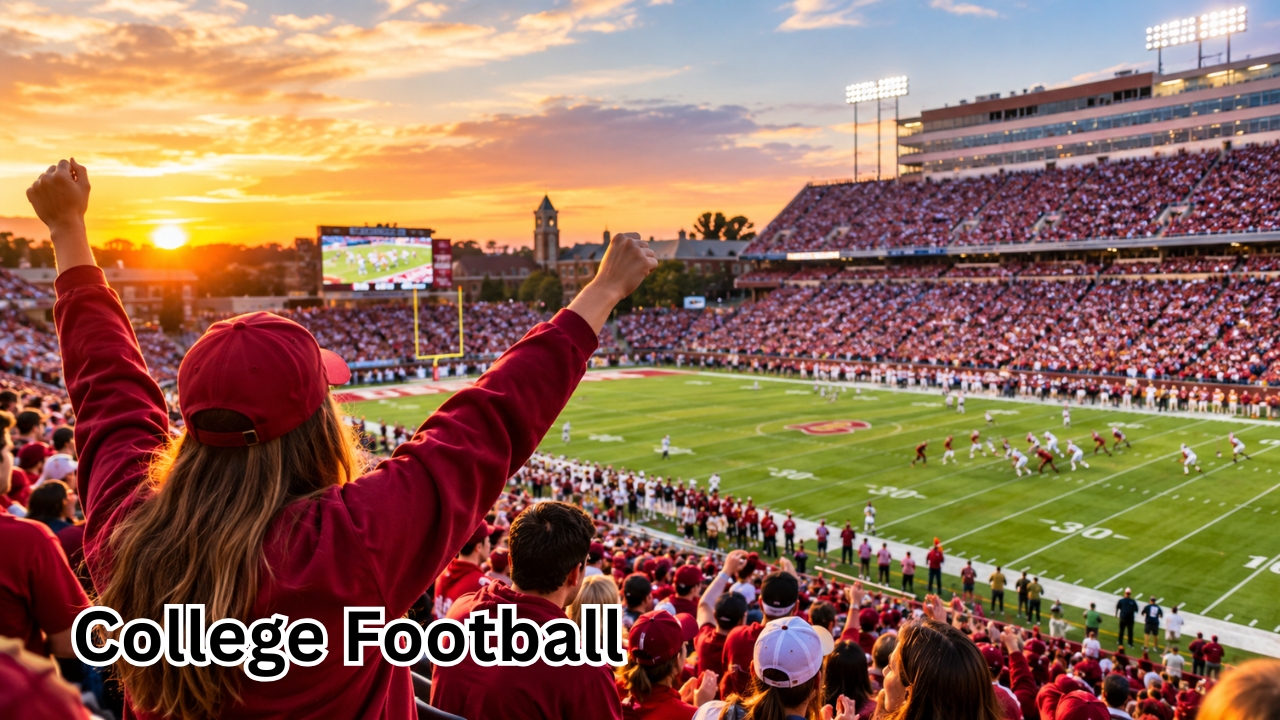
College football is more than a sport. Across the United States, it is a tradition that brings together students, alumni, families, and communities every fall. From packed stadiums and marching bands to intense rivalries and championship races, the college football experience has a character that is different from professional football.
For newcomers, however, the sport can seem complicated. There are numerous conferences, hundreds of teams, changing schedules, bowl games, rankings, and a postseason system that has evolved significantly over time.
Whether you are discovering college football for the first time or simply want a better understanding of how the sport works, this guide covers the essentials. You will learn how the season is organized, what makes college teams unique, how rankings and conferences matter, and why millions of fans follow the sport every year.
What Is College Football?
College football is American football played by teams representing colleges and universities. Most major programs compete under the National Collegiate Athletic Association (NCAA), although the overall college sports structure includes different divisions and governing arrangements.
The highest-profile programs compete in the Football Bowl Subdivision, commonly called the FBS. These teams attract large crowds, major television audiences, and significant attention from sports media.
College football is closely connected to campus life. A Saturday game can become a major social event, with students attending tailgates, alumni returning to campus, and local businesses preparing for increased crowds.
The atmosphere is one of the defining features of the sport. Some universities have stadiums capable of holding well over 80,000 spectators, creating an experience that can feel more like a major community gathering than an ordinary sporting event.
How Does a College Football Season Work?
A typical college football season begins in late summer or early fall and continues through the end of the calendar year, with postseason competition extending into January.
Teams usually play a regular-season schedule made up of conference and non-conference games. The exact number and structure of games can vary depending on the team and conference.
During the season, teams attempt to build strong records while competing for conference success and postseason opportunities.
The basic structure can include:
- Non-conference games
- Conference games
- Rivalry games
- Conference championship contests
- College Football Playoff games
- Bowl games
The importance of individual games can vary considerably. A matchup between two highly ranked teams may have major implications for conference championships and postseason positioning, while a rivalry game can carry enormous historical importance even when the teams have different records.
Understanding College Football Conferences
Conferences are groups of universities that compete against one another regularly. Conference membership has become particularly important in modern college football because it influences scheduling, championships, media agreements, and postseason opportunities.
Some of the most recognizable conference names include the Big Ten, SEC, Big 12, and ACC.
Conference structures can change over time as universities move between leagues. Realignment has become one of the major stories surrounding college athletics, with schools sometimes changing conferences because of competitive, financial, geographic, or media considerations.
| Conference | General Characteristics | Why Fans Follow It |
|---|---|---|
| Big Ten | Large universities with historic programs | Rivalries, tradition, and nationally prominent teams |
| SEC | Strong football culture and major programs | High-profile matchups and intense competition |
| Big 12 | Diverse group of competitive programs | Offensive football and changing conference landscape |
| ACC | Long-established conference with notable programs | Rivalries and strong regional traditions |
| Other FBS conferences | Wide range of schools and programs | Underdog stories and emerging teams |
Conference membership should always be checked against the current season because college football’s alignment can change.

Why College Football Rivalries Matter
Rivalries are one of the most entertaining parts of college football.
Some rivalries have existed for generations. Families may support opposing teams, alumni may return to campus every year, and the result of one game can become a talking point for months.
These contests are often about more than standings. They can involve regional pride, school history, traditions, trophies, and bragging rights.
A rivalry game can also create memorable traditions. Some universities have special pregame ceremonies, unique trophies, songs, or chants associated with their biggest opponent.
For many supporters, attending a rivalry game is one of the most memorable experiences associated with college life.
College Football Rankings Explained
Rankings are used to identify teams considered among the strongest in the country. Several ranking systems and polls may be discussed during a season, while selection processes are used to determine postseason participants.
Rankings can influence public perception, media coverage, and the importance attached to upcoming games.
However, a ranking is not the same thing as an official championship result. Teams still have to play their schedules, and postseason qualification depends on the rules governing the competition in that season.
When following rankings, it helps to look beyond a team’s position and consider:
- Overall record
- Conference performance
- Quality of opponents
- Results against highly regarded teams
- Performance throughout the season
- Relevant postseason criteria
This provides a more complete picture than simply looking at a team’s ranking number.
The College Football Playoff
The College Football Playoff is the postseason competition used to determine the national champion at the highest level of college football.
The playoff format has changed over time. The expanded format introduced for the 2024 season increased the number of participating teams compared with the earlier four-team system.
That expansion changed the postseason landscape by giving more teams a path into championship competition.
The playoff is particularly important because the regular season can have consequences beyond a team’s conference standings. Every major matchup can potentially influence postseason positioning.
Fans therefore follow not only individual teams but also the wider national picture.
What Makes College Football Different From the NFL?
College football and the National Football League share the basic rules of American football, but the two environments are quite different.
College teams represent educational institutions, while NFL teams are professional organizations. College football also has a much stronger connection to campus identity and alumni culture.
Here are some major differences:
Team Identity
College teams are strongly associated with universities, traditions, student communities, and alumni. Fans may support the same school for decades.
Stadium Atmosphere
College stadiums can create distinctive environments with marching bands, student sections, chants, mascots, and longstanding traditions.
Recruiting and Player Development
College programs recruit athletes from high schools and other pathways. Players develop their skills while competing at the collegiate level and may eventually enter professional football.
Scheduling
College teams operate within conference structures and often play traditional opponents that have been part of their schedules for many years.
The Importance of the College Football Fan Experience
One reason college football remains so popular is that attending a game can be an experience beyond the action on the field.
On game day, campuses can become crowded with visitors. Tailgating begins hours before kickoff, university bands perform, and fans wear school colors throughout the surrounding area.
The experience may include:
- Tailgate gatherings
- Marching bands
- Cheerleaders and mascots
- Student sections
- Pregame traditions
- Alumni events
- Rivalry celebrations
- Postgame campus activities
For first-time visitors, arriving early can be worthwhile because much of the atmosphere happens before kickoff.
How to Follow College Football
Following college football does not require knowing every team or conference immediately.
A simple approach is to start with one team or conference that interests you. Learn its schedule, major rivals, key traditions, and recent history.
From there, you can gradually follow the national picture.
A useful routine is to:
- Check the weekly schedule.
- Follow major rankings.
- Watch important conference games.
- Learn the biggest rivalry matchups.
- Track conference standings.
- Follow postseason developments.
- Watch games involving highly ranked teams.
As you become more familiar with the sport, the connections between teams, conferences, rivalries, and postseason races become easier to understand.
Why College Football Has Such a Strong Tradition
Tradition is at the heart of college football.
Many programs have histories stretching back generations. Universities preserve old rivalries, historic stadiums, famous coaches, memorable seasons, and distinctive game-day rituals.
This creates a strong connection between past and present.
A graduate may leave campus decades ago but continue watching the same team every Saturday. Parents can introduce their children to the university they supported growing up, creating a cycle of fandom that continues across generations.
That combination of sport, education, community, and history gives college football an identity that is difficult to replicate elsewhere.
How to Choose a College Football Game to Watch
With so many games played during a typical Saturday, deciding what to watch can be difficult.
Start with the most meaningful matchups. A game between highly ranked teams is an obvious choice, but other contests can be just as interesting.
Look for:
- Major rivalry games
- Conference championship implications
- Undefeated or highly ranked teams
- Closely matched opponents
- Teams fighting for postseason opportunities
- Interesting coaching or player storylines
You can also watch games involving smaller or less familiar programs. College football frequently produces unexpected results, and discovering a new team can make following the sport more enjoyable.
The Role of College Football in American Culture
College football has a substantial cultural presence in many parts of the United States.
In some communities, the university team is a major part of local identity. Game days can affect restaurants, hotels, transportation, retail businesses, and community events.
The sport also provides a connection between universities and their alumni. A college football game can bring former students back to campus years after graduation.
For students, attending games can become part of the college experience itself. The memories often involve friends, traditions, and campus life as much as the final score.
Frequently Asked Questions About College Football

What is college football?
College football is American football played by university teams. The highest-profile programs generally compete in the NCAA’s Football Bowl Subdivision, or FBS.
When is the college football season?
The regular season generally takes place during the fall, with games beginning in late summer or early fall and postseason competition continuing into January.
What is the College Football Playoff?
The College Football Playoff is the postseason competition used to determine the national champion at the highest level of college football. Its format has evolved over time, including an expansion beginning with the 2024 season.
What are college football conferences?
Conferences are groups of universities that compete within organized leagues. Conference membership affects scheduling, championships, and other aspects of the season.
Why are college football rivalries so important?
Rivalries often reflect decades of history, regional competition, school identity, and tradition. They can remain important regardless of the teams’ positions in the standings.
Can college football players become professionals?
Yes. College football provides a major pathway for athletes who want to pursue professional football. Players who meet the applicable requirements can enter the professional draft process or pursue other professional opportunities.
Final Thoughts
College football combines competition with tradition, school identity, community, and history. That combination helps explain why the sport has such a dedicated following.
For new fans, the sheer number of teams and changing conference structures can initially seem overwhelming. The easiest way to understand the sport is to start small: follow a team, learn its rivals, watch a few important games, and gradually become familiar with the wider college football landscape.
Once the basic structure becomes clear, the season becomes much easier to follow. Every Saturday brings new matchups, unexpected results, memorable performances, and stories that can shape the postseason.
Whether you are interested in stadium traditions, historic rivalries, conference competition, or the road toward a national championship, college football offers plenty to explore throughout the season.
Also Read : Anthony Bourdain: Life, Career, Books, Travel Shows, and Lasting Legacy











Leave a Reply