

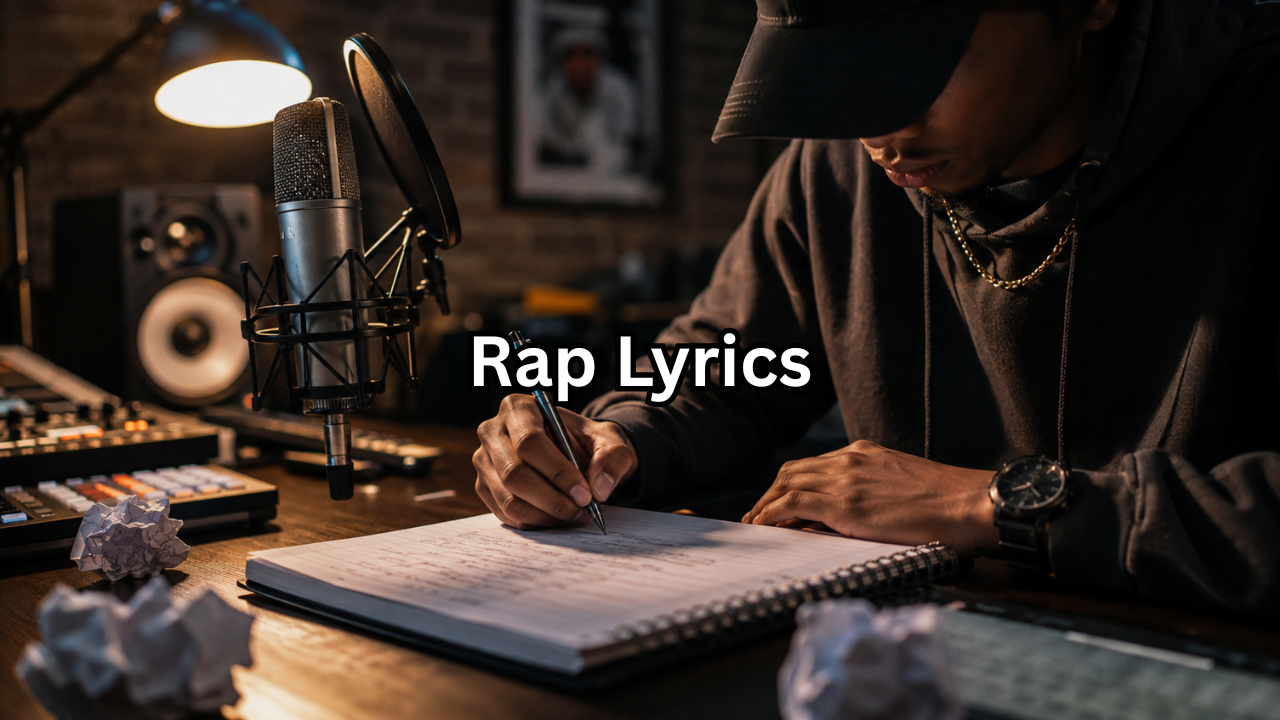
Rap lyrics are more than words arranged over a beat. They are a way to tell stories, express emotions, share experiences, challenge ideas, and create a unique identity through music. From clever punchlines to emotional storytelling, strong rap lyrics can leave a lasting impression on listeners.
Whether you are a beginner writing your first verse or an experienced artist looking for better ways to develop your style, understanding what makes rap lyrics effective can help you become a stronger songwriter.
Great rap writing does not always depend on complicated vocabulary. Sometimes, the simplest line can have the greatest impact when it communicates a real feeling or paints a memorable picture.
This guide explores the essential elements of rap lyrics, explains how to improve your writing process, and shares practical techniques you can use to create original verses that sound natural and authentic.
What Are Rap Lyrics?
Rap lyrics are the written words performed by a rapper as part of a song or freestyle. They can cover almost any subject, including personal experiences, relationships, ambition, social issues, confidence, struggles, success, humor, and everyday life.
Unlike ordinary writing, rap lyrics are closely connected to rhythm and musical timing. The way words sound when spoken can be just as important as their meaning.
A strong rap verse often combines several elements:
- Rhythm and flow
- Rhyme patterns
- Wordplay
- Storytelling
- Emotion
- Imagery
- Punchlines
- Personal perspective
- Memorable hooks
The best combination depends on the artist’s personality and the type of rap they want to create.
Why Good Rap Lyrics Matter
A beat can immediately attract someone’s attention, but lyrics often determine whether the listener remembers the song.
Strong lyrics give a rapper something distinctive to say. They allow artists to communicate ideas in a way that feels personal rather than generic.
Consider what listeners may remember after a song ends. They might remember a clever line, an emotional story, a powerful message, or a catchy chorus.
That is why effective rap lyrics need more than rhyme. They need purpose.
Good writing can also help an artist develop a recognizable identity. Over time, certain subjects, phrases, storytelling techniques, and flows can become part of an artist’s signature style.

Key Elements of Effective Rap Lyrics
There is no single formula for writing a great rap verse. However, several building blocks appear repeatedly in successful songwriting.
1. Strong Ideas
Start with something you actually want to say.
Before worrying about rhymes, decide what the verse is about. A clear central idea makes the writing process easier and prevents the lyrics from becoming a collection of unrelated lines.
For example, a verse could focus on:
- Chasing a personal goal
- Learning from failure
- Growing up
- Friendship
- Competition
- Confidence
- A difficult experience
- Life in a particular environment
A specific idea is usually more interesting than a vague subject.
2. Rhythm and Flow
Flow describes how the lyrics move with the beat. It involves timing, pauses, syllable placement, emphasis, and changes in delivery.
Two rappers can use similar words but sound completely different because their flows are different.
When writing, try reading your lines aloud. If you constantly run out of breath or have to force certain words into place, the line may need revision.
Good rap lyrics should feel comfortable when spoken.
3. Rhyme Schemes
Rhyme is one of the most recognizable features of rap writing.
Simple end rhymes can work well, but experimenting with internal rhymes and multisyllabic rhymes can make a verse more interesting.
For example, instead of relying only on the final word of each line, you can create sounds that connect throughout the sentence.
The important thing is not to force a rhyme simply because it fits. Meaning should remain important.
4. Wordplay
Wordplay gives rap lyrics another layer of personality.
Artists can use:
- Double meanings
- Metaphors
- Similes
- Homophones
- Cultural references
- Contrasts
- Unexpected comparisons
Effective wordplay often rewards the listener for paying attention.
However, clever writing does not need to be complicated. A simple idea delivered from an unexpected angle can be more memorable than an overly complex line.
5. Storytelling
Storytelling is one of the strongest tools available to a rapper.
Instead of simply saying that something was difficult, describe what happened. Give the listener details that allow them to imagine the situation.
Think about:
Who?
Who was involved?
Where?
Where did it happen?
When?
What moment or period are you describing?
What happened?
What changed?
Why did it matter?
What did you learn or feel?
Specific details make a story feel real.
Rap Lyrics and Different Writing Styles
Rap is a broad musical form, and lyrics can sound dramatically different depending on the style.
| Rap style | Common lyrical characteristics | Best suited for |
|---|---|---|
| Storytelling rap | Detailed narratives and characters | Personal experiences and stories |
| Conscious rap | Ideas, observations, and social themes | Messages and reflections |
| Battle rap | Punchlines, wordplay, and competitive writing | Competitive performances |
| Melodic rap | Emotional and simpler phrasing | Hooks and personal themes |
| Freestyle rap | Spontaneous ideas and flexible rhymes | Improvisation |
| Comedy rap | Humor and exaggerated situations | Entertainment |
| Motivational rap | Confidence, goals, and perseverance | Inspirational themes |
These categories are not strict rules. Modern artists often combine several styles within the same song.
How to Start Writing Rap Lyrics
Getting the first line onto the page can be difficult. A useful approach is to separate the creative process into smaller steps.
Step 1: Choose Your Topic
Pick one clear subject.
Instead of writing about “life,” narrow it down to something more specific, such as overcoming a setback or working toward a personal goal.
Step 2: Make a Word Bank
Write down words and phrases associated with your topic.
Do not worry about making them rhyme yet.
If your subject is ambition, your list might include ideas such as:
- Goals
- Pressure
- Progress
- Failure
- Patience
- Discipline
- Dreams
- Sacrifice
This gives you material to work with.
Step 3: Find Rhymes
Now experiment with different rhyme families.
Do not limit yourself to perfect rhymes. Near rhymes can create interesting sounds and give you more flexibility.
Step 4: Build a Basic Structure
A simple rap song might include:
- Intro
- Verse
- Chorus or hook
- Verse
- Chorus
- Outro
A verse can also be divided into smaller sections, allowing the story or idea to develop gradually.
Step 5: Read Everything Out Loud
This step is extremely important.
Something can look impressive on a screen but sound awkward when performed.
Reading your lyrics aloud helps you identify:
- Weak rhythms
- Unnatural wording
- Excessive syllables
- Repeated ideas
- Difficult transitions
Revise until the words feel natural.
How to Make Rap Lyrics More Memorable
Memorable writing usually contains something that listeners can quickly understand and remember.
One useful technique is repetition. A carefully repeated phrase can strengthen a chorus or reinforce the central message of a song.
Another technique is contrast. Putting two opposing ideas together can create a stronger impression.
For example, a writer might contrast confidence with doubt, success with struggle, or the past with the present.
Imagery can also make lyrics memorable. Instead of simply describing an emotion, create a visual scene that communicates it.
Keep Your Language Natural
Do not use complicated words simply to sound intelligent.
If you would never say something in a conversation, consider whether it belongs in your lyrics.
Authenticity is valuable because listeners can often recognize when writing feels forced.
Common Mistakes When Writing Rap Lyrics
Even talented writers can fall into habits that weaken their songs.
Forcing Every Rhyme
A rhyme should support the idea, not control it.
If a sentence becomes confusing just to make the final words rhyme, rewrite it.
Using Too Many Clichés
Common expressions can make lyrics sound predictable.
Try finding your own way to describe familiar experiences.
Ignoring the Beat
A great line can still fail if it does not fit the instrumental.
Always consider the beat’s tempo, rhythm, and mood.
Trying to Sound Like Someone Else
Studying other rappers can teach you about technique, but copying their voice or writing style can prevent you from developing your own identity.
Take inspiration from many sources while building something personal.
Editing Too Little
First drafts are rarely perfect.
Strong songwriting often comes from rewriting. Remove weak lines, replace unnecessary words, and test different rhyme patterns.
Practical Exercises to Improve Your Rap Lyrics
Writing consistently is one of the best ways to improve.
Try these exercises regularly:
One-word challenge:
Choose a random word and write eight lines around it.
Story exercise:
Describe a real event in chronological order without worrying about rhymes initially.
Rhyme exercise:
Choose one word and create a long list of possible rhymes and near rhymes.
Beat exercise:
Play an instrumental and freestyle ideas before writing them down.
Rewrite exercise:
Take an old verse and rewrite it using better imagery, stronger rhymes, or fewer unnecessary words.
These exercises help develop both creativity and technical skill.
Using Technology to Develop Rap Writing Skills
Technology has made songwriting easier to practice.
Beat-making software can help writers experiment with different tempos and arrangements. Recording apps allow artists to hear how their lyrics actually sound when performed.
Digital notes can also be useful for capturing ideas quickly. A strong line may appear while you are walking, working, or relaxing, so keeping a place to record ideas can prevent them from being forgotten.
However, technology should support creativity rather than replace it.
Your experiences, observations, personality, and perspective are what make your writing unique.
How to Create Original Rap Lyrics
Originality begins with your perspective.
Two people can experience similar situations but describe them completely differently. Your job as a writer is to find the details that only you would notice.
Ask yourself:
- What did I actually experience?
- What did I learn?
- What emotion was strongest?
- What detail would another person overlook?
- How would I explain this to a close friend?
These questions can lead you toward more personal material.
Avoid copying another artist’s lines, distinctive phrasing, or signature concepts. Instead, study techniques such as rhyme structure, storytelling, rhythm, and wordplay, then apply those techniques to your own ideas.
Tips for Better Rap Lyrics
If you want to improve quickly, focus on a few fundamentals rather than trying to master everything at once.
- Write regularly, even when you do not feel inspired.
- Read your lyrics aloud before recording them.
- Keep a notebook or digital collection of ideas.
- Study different rhyme patterns.
- Listen critically to songs you admire.
- Practice writing without rhyming first.
- Use specific details instead of generic statements.
- Experiment with different flows.
- Rewrite your weakest lines.
- Develop subjects and perspectives that feel personal.
Progress usually comes from consistent practice rather than one perfect writing session.

Frequently Asked Questions About Rap Lyrics
What makes rap lyrics good?
Good rap lyrics usually combine a clear idea, strong rhythm, effective word choice, memorable rhyme patterns, and authentic emotion. The best writing also sounds natural when performed rather than simply looking good on paper.
How can I start writing rap lyrics?
Start with a subject that interests you. Write down related ideas, phrases, emotions, and experiences before worrying about rhyme. Once you have material, organize it into lines and experiment with rhythm and rhyme.
Do rap lyrics have to rhyme?
No. Rhyme is an important part of many rap styles, but it is not an absolute requirement. Some artists use loose rhyme schemes, conversational writing, or rhythm and wordplay to create impact.
How long should a rap verse be?
There is no universal length. A verse can be short or extended depending on the song’s structure, beat, and creative goal. What matters most is whether the verse develops its idea effectively.
How do I make my rap lyrics more original?
Write from your own experiences and observations. Use specific details, personal perspectives, unusual comparisons, and authentic emotions. Studying other artists can teach technique, but your own viewpoint should remain at the center.
Is it better to write rap lyrics before choosing a beat?
Either approach can work. Some writers begin with a beat and build lyrics around its rhythm, while others write ideas first and find an instrumental later. Experiment with both methods to discover which produces your best work.
Final Thoughts
Writing powerful rap lyrics is a combination of creativity, technique, observation, and practice. You do not need to know every rhyme pattern or have an extraordinary vocabulary to begin.
Start with something meaningful to you. Develop the idea, experiment with rhythm, explore different rhymes, and read your work aloud. Then revise it.
The more you write, the easier it becomes to recognize what works and what needs improvement.
Most importantly, do not focus entirely on trying to sound like a rapper. Focus on sounding like yourself. A distinctive perspective, honest emotion, and carefully crafted words can turn a simple verse into something listeners remember.
Also Read : 123movies4u: What You Should Know Before Using Free Movie Streaming Sites











Leave a Reply