

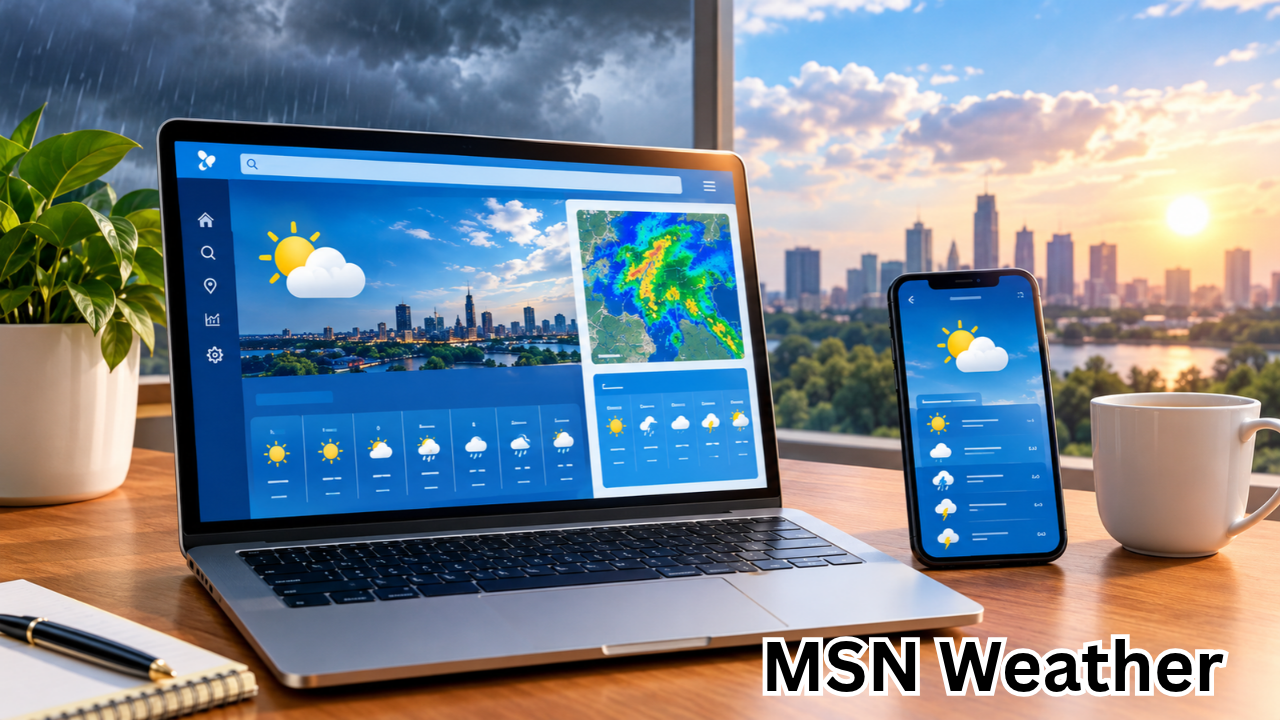
Weather can change your plans in minutes. Whether you are preparing for work, planning a weekend trip, checking the chances of rain, or deciding what to wear, having access to a reliable weather forecast makes everyday decisions easier. This is where MSN Weather becomes a useful online resource for people who want weather information in one convenient place.
MSN Weather provides access to local forecasts, temperature information, precipitation predictions, wind conditions, and other weather-related details. Its website and supported app experiences help users understand current conditions and prepare for the hours and days ahead.
Unlike checking the temperature alone, using a weather service with hourly forecasts, extended outlooks, and weather maps can give you a broader picture of what is happening outside. From sunny mornings to approaching storms, these details can help you plan more confidently.
In this guide, we will explore what MSN Weather is, its main features, how to use it, its benefits and limitations, and how it compares with other ways to check the weather.
What Is MSN Weather?
MSN Weather is a weather information service associated with Microsoft’s MSN platform. It allows users to look up weather conditions for different locations and access forecasts through a web browser and supported Microsoft experiences.
The service is designed for everyday use. You do not need advanced meteorological knowledge to understand its basic information, making it accessible to students, commuters, travelers, families, and professionals.
Depending on your location, device, and the version of the service available, MSN Weather may provide information such as:
- Current temperature and perceived temperature.
- Hourly weather forecasts.
- Daily forecasts for upcoming days.
- Rain and precipitation chances.
- Wind speed and direction.
- Humidity and visibility information.
- Sunrise and sunset times.
- Weather maps and radar-style visualizations where available.
- Severe weather alerts and related notifications where supported.
The exact information available can vary by region and platform. Forecasts also change as new observations and weather models become available.
Key Features of MSN Weather
MSN Weather brings several useful weather details together, allowing users to check conditions without relying on multiple sources for basic information.
1. Current Weather Conditions
One of the most useful features is the ability to view current conditions for a selected location. The displayed information can help you understand whether the weather is hot, cold, cloudy, rainy, or clear.
For example, knowing that the temperature is 32°C may help you decide what to wear. However, temperature is only one part of the picture. Wind, humidity, sunlight, and the feels-like temperature can influence how comfortable it feels outdoors.
Checking these details before leaving home can help you prepare for the day.
2. Hourly Weather Forecasts
An hourly forecast is helpful when the weather may change throughout the day.
Suppose you plan to travel in the afternoon. An hourly outlook may indicate whether rain is expected around your departure time or whether temperatures are likely to rise later.
This feature can be particularly useful for:
- Planning outdoor activities.
- Choosing a suitable time for a walk.
- Scheduling errands.
- Preparing for changing temperatures.
- Checking possible rainfall before commuting.
Hourly predictions are estimates rather than guarantees, so it is worth checking again when conditions are changing quickly.
3. Daily and Extended Forecasts
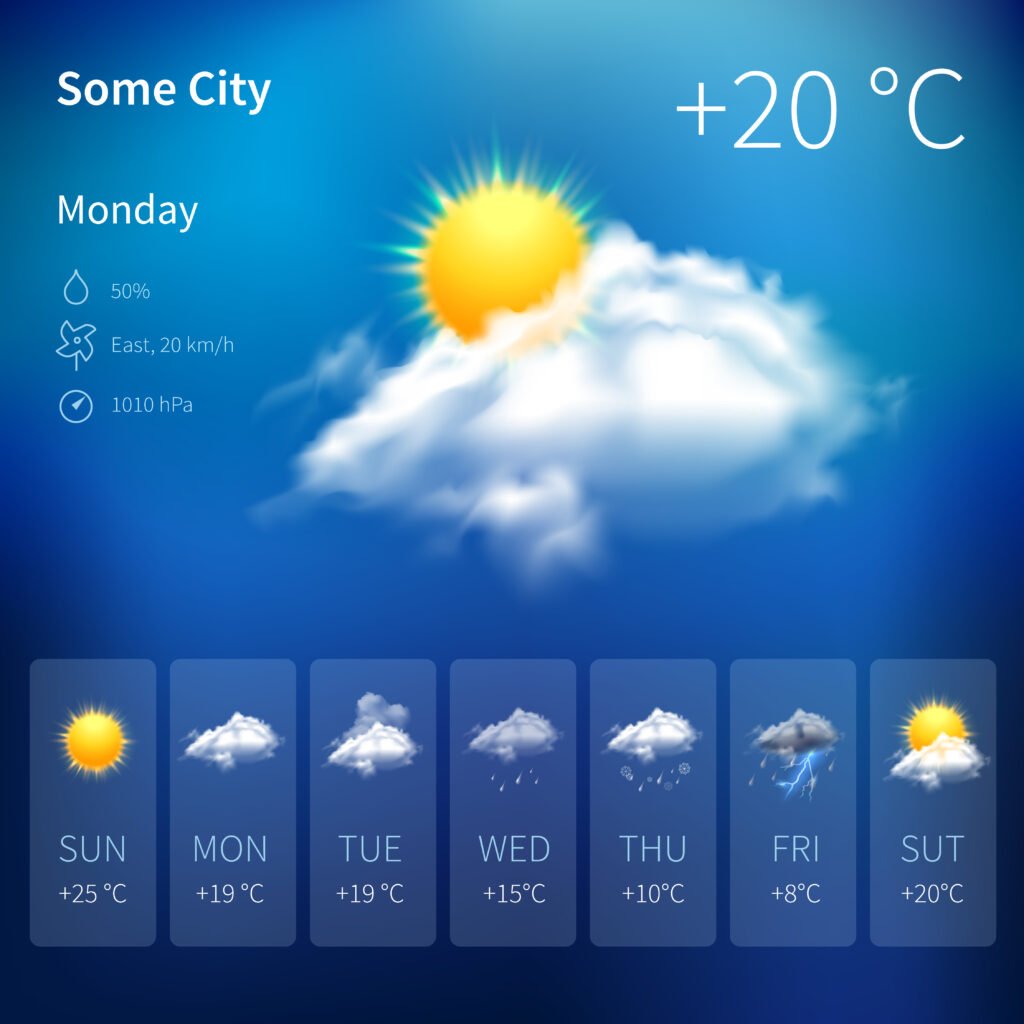
Daily forecasts provide a broader overview of expected weather. They commonly include predicted high and low temperatures, general conditions, and precipitation information.
An extended forecast can help with planning a trip, organizing an outdoor event, or preparing for a busy week.
However, forecasts generally become less certain further into the future. A prediction several days away should be treated as a useful planning guide rather than an exact description of what will happen.
4. Rain and Precipitation Information
Rain forecasts are important for people who commute, travel, work outdoors, or organize events.
MSN Weather may display precipitation probabilities and related information for supported locations. These details can help you decide whether to carry an umbrella, postpone an outdoor activity, or check conditions before driving.
Remember that a percentage chance of precipitation does not automatically mean rain will cover the entire area for that percentage of the day. The interpretation depends on the forecast provider’s methodology and the location being forecast.
5. Weather Maps and Radar
Visual weather information can make complicated conditions easier to understand. Where available, weather maps and radar-style displays help users examine precipitation patterns and the movement of weather systems.
These views may be useful when monitoring rain or checking conditions in surrounding areas.
Radar availability, update frequency, and geographic coverage can differ by region. In locations where detailed radar imagery is unavailable, users may need to consult their national meteorological service for additional information.
6. Wind, Humidity, and Other Weather Details
Temperature alone does not explain how the weather will feel. Wind can make cool conditions feel colder, while high humidity can make hot weather feel more uncomfortable.
Wind speed and direction may be especially relevant for cyclists, drivers of high-sided vehicles, outdoor workers, and people participating in recreational activities.
Humidity, visibility, and sunrise or sunset times can also provide useful context for planning the day.
7. Weather Alerts
Weather alerts can help people prepare for potentially dangerous conditions, including severe storms, flooding, or extreme heat, when supported and available.
Availability and notification behavior depend on the location, platform, and alert settings. Do not assume that every local hazard will appear in MSN Weather.
For urgent warnings, follow official announcements from your local disaster-management authorities and meteorological department.
How to Use MSN Weather
Getting started with MSN Weather is straightforward. Follow these steps to check the forecast for your area.
Step 1: Open the MSN Weather Website
Visit the official MSN website at https://www.msn.com/ and look for its Weather section. You can also search for MSN Weather in your browser to locate the relevant page.
Make sure you are using a legitimate Microsoft or MSN destination rather than an unfamiliar website offering similar services.
Step 2: Select Your Location
Search for your city or another location you want to check. Selecting the correct location is important because weather conditions can differ significantly between nearby cities and neighborhoods.
If your browser or device offers location access, you may be able to use it to identify local conditions. You can also search for a place manually if you prefer not to share your location.
Step 3: Review Current Conditions
Look at the current temperature, feels-like temperature, and general weather description.
If you are planning to spend time outside, check wind and humidity information as well. These details may affect your comfort more than the temperature alone.
Step 4: Check the Hourly Forecast
Review the forecast for the hours when you expect to be outdoors.
Pay attention to possible rainfall, temperature changes, and increasing wind. This can help you choose a better time for travel or outdoor activities.
Step 5: Explore the Daily Forecast
If you are planning ahead, review the coming days. Use the information to prepare for expected conditions, but remember that the forecast may change.
For important plans, check the forecast again closer to the event.
Step 6: Compare Important Warnings
If the forecast mentions severe weather, consult the relevant official weather authority for your area.
This is particularly important when dealing with heavy rainfall, heatwaves, thunderstorms, flooding, or other potentially dangerous conditions.
MSN Weather at a Glance
The following table summarizes the main types of information users may find through MSN Weather.
| Feature | What It Helps You Do |
|---|---|
| Current conditions | Check the latest displayed weather for a location |
| Hourly forecast | Plan activities around expected weather changes |
| Daily forecast | Prepare for upcoming days |
| Rain probability | Assess the possibility of precipitation |
| Wind information | Understand wind speed and direction |
| Humidity | Evaluate how moisture may affect comfort |
| Weather maps | Explore precipitation and weather patterns where available |
| Weather alerts | Check supported warnings and potentially hazardous conditions |
| Sunrise and sunset | Plan outdoor activities around daylight |
Feature availability may vary depending on your location, device, and the version of MSN Weather you use.
Benefits of Using MSN Weather
There are several reasons people use MSN Weather as part of their daily routine.
Convenient Access to Weather Information
One of its main advantages is convenience. Users can access weather information through a browser without necessarily installing a dedicated weather application.
This is helpful for people who prefer checking the forecast on a computer, although supported mobile experiences can also provide access to weather information.
Easy-to-Understand Forecasts
Weather terminology can sometimes be confusing, particularly for people who simply want to know whether they should expect rain or sunshine.
MSN Weather presents common forecast information in a format designed for everyday users. Temperatures, weather descriptions, and precipitation predictions help make the information easier to interpret.
Useful for Everyday Planning
A weather forecast can influence a surprising number of daily decisions.
For example, students may check conditions before walking to school, commuters may look for rain before leaving home, and families may review the weekend forecast before organizing outdoor activities.
People who work in construction, agriculture, transportation, and other weather-sensitive industries may also benefit from regularly monitoring conditions. However, professional decisions should rely on appropriate specialist forecasts and official warnings when necessary.
Access to Different Locations
Checking another city can be helpful when planning travel or contacting someone in a different region.
Instead of relying only on the weather outside your home, you can look up the destination and prepare for its expected conditions.
This is particularly useful when traveling between locations with different climates or when planning activities several days in advance.
Limitations to Consider When Using MSN Weather
Although MSN Weather can be useful, no forecast service can predict every weather change perfectly.
Understanding its limitations helps you use the information more effectively.
Forecasts are not guarantees. Weather conditions can change because of shifting wind patterns, developing storms, and other atmospheric factors. Predictions for later dates are generally less certain than short-term forecasts.
Local accuracy can vary. Forecast quality depends on available observations, forecasting models, geographic conditions, and the provider’s data sources. Conditions in mountainous areas or coastal regions can vary over short distances.
Some features may not be available everywhere. Radar coverage, alerts, and certain forecast details may differ by country or platform.
An internet connection may be required. Viewing updated online forecasts generally requires internet access, although some supported apps may retain limited information temporarily.
Official warnings remain important. For serious weather threats, MSN Weather should not be your only source of information. Check the official meteorological and emergency-management authorities responsible for your location.
MSN Weather vs. Other Weather Services
MSN Weather is one of several ways to check weather conditions. Other services may provide different visualizations, specialist forecasting tools, or locally focused information.
The best choice depends on what you need.
| Weather Service | Best Use |
|---|---|
| MSN Weather | Convenient access to everyday forecasts through the MSN ecosystem |
| <escape>Google Weather</escape> | Quick weather checks through supported Google Search and device experiences |
| <escape>AccuWeather</escape> | Forecasts and weather information through its website and apps |
| <escape>The Weather Channel</escape> | General forecasts, weather news, and severe-weather information |
| National meteorological services | Official forecasts, local warnings, and region-specific weather guidance |
These services differ in coverage, available features, and data presentation. No single service is necessarily the most accurate for every location or weather condition.
For users in Pakistan, checking the Pakistan Meteorological Department (PMD) is especially important when seeking official information about monsoon rainfall, heatwaves, thunderstorms, or potential flooding. MSN Weather can serve as a convenient additional reference.
Tips for Getting Better Results From MSN Weather
A few simple habits can make weather forecasts more useful.
- Choose the correct location: Verify the city or area before relying on the forecast.
- Check the hourly outlook: This is often more helpful than a daily summary when planning a specific activity.
- Review more than temperature: Consider humidity, wind, and precipitation as well.
- Refresh the forecast regularly: Conditions and predictions can change throughout the day.
- Treat long-range predictions cautiously: Use them for general planning rather than exact scheduling.
- Check official warnings: Consult local authorities when severe weather is possible.
- Compare sources when necessary: If forecasts disagree, look for updated information from a trusted meteorological authority.
These habits help you make more informed decisions without treating a weather forecast as a certainty.
Frequently Asked Questions About MSN Weather
1. What is MSN Weather used for?
MSN Weather is used to check current weather conditions and forecasts for selected locations. Depending on availability, users can view temperatures, hourly and daily forecasts, precipitation chances, wind information, and other weather details.
2. Is MSN Weather free to use?
MSN Weather has generally been available as a free weather information service. Access methods and individual features may vary by platform, region, and current service arrangements.
3. How do I check my local forecast on MSN Weather?
Visit the MSN website and open its Weather section. Search for your city or preferred location, then review the current conditions and upcoming forecast. If location access is supported, you may also be able to use your device’s location.
4. Can I use MSN Weather on my mobile phone?
You can access MSN Weather through a compatible mobile browser. Additional access may be available through supported Microsoft apps or device experiences, depending on your operating system and region.
5. Is MSN Weather always accurate?
No weather service is perfectly accurate. Forecast quality depends on location, weather conditions, available data, and how far ahead the prediction extends. For severe weather, compare the forecast with official warnings from your local meteorological authority.
6. Is MSN Weather useful for checking rain and severe weather?
Yes, it can help you review precipitation forecasts and other weather information where available. However, radar coverage and alert availability vary. For potentially dangerous conditions, always verify warnings through the official authorities responsible for your area.
Final Thoughts
MSN Weather is a convenient option for people who want to check local conditions, review upcoming forecasts, and plan their daily activities with greater confidence. Its combination of current weather information, hourly predictions, daily outlooks, and other weather details makes it useful for everyday decisions.
Whether you are preparing for work, organizing a family outing, planning a journey, or simply deciding what to wear, checking the forecast can help you anticipate changing conditions.
The most effective approach is to use MSN Weather as a regular source of weather information while recognizing that forecasts can change. For severe weather and important safety decisions, supplement it with official local warnings and trusted meteorological updates.
By checking the right location, reviewing hourly conditions, and paying attention to potential hazards, you can get more value from MSN Weather and make better-informed plans throughout the week.
Also Read : Rams vs Panthers: Game Recap, Player Stats, Head-to-Head History, and Key Highlights











Leave a Reply