


The term family nudist is often used to describe individuals or families who practice naturism together in appropriate, non-sexual environments. For these families, nudity is not about attracting attention or creating sexual situations. Instead, it may reflect a personal philosophy centered on body acceptance, comfort, respect for nature, and freedom from unnecessary body shame.
Family naturism can be unfamiliar to people who grew up in cultures where nudity is considered strictly private. Understanding this lifestyle requires looking beyond common stereotypes and recognizing the importance of consent, personal boundaries, child protection, and local laws.
Whether someone is researching naturism out of curiosity, considering a naturist vacation, or simply trying to understand the meaning of the term, learning about its principles can provide a clearer perspective.
This guide explains what family nudism means, how it differs from other lifestyles, the potential benefits and challenges, and the practical considerations families should understand before exploring naturist activities.
What Is Family Nudism?
Family nudism refers to a form of social or recreational nudity practiced by families in suitable environments where it is lawful, consensual, and non-sexual. The term is closely related to family naturism, which generally places additional emphasis on respect for nature, personal well-being, and acceptance of different body types.
For some families, naturism may involve spending time at a designated clothing-optional beach, visiting a family-friendly naturist resort, or enjoying an appropriately private outdoor setting.
However, not every family that embraces body positivity practices nudism, and not everyone who identifies as a nudist follows the same customs.
The central idea is that ordinary human bodies do not need to be viewed through a sexual lens in every situation. At the same time, a naturist environment must maintain clear boundaries and protect everyone’s dignity.
Family Nudism and Family Naturism: Is There a Difference?
The terms are often used interchangeably, although their emphasis can vary.
- Family nudism: Generally describes families participating in non-sexual social or recreational nudity.
- Family naturism: Often emphasizes a broader lifestyle involving nature, body acceptance, environmental awareness, and respectful social interaction.
- Body positivity: Encourages people to treat different body shapes, sizes, ages, and physical characteristics with respect, without requiring anyone to participate in nudity.
These concepts can overlap, but they are not identical. A family can promote body positivity and healthy attitudes toward appearance without adopting a naturist lifestyle.
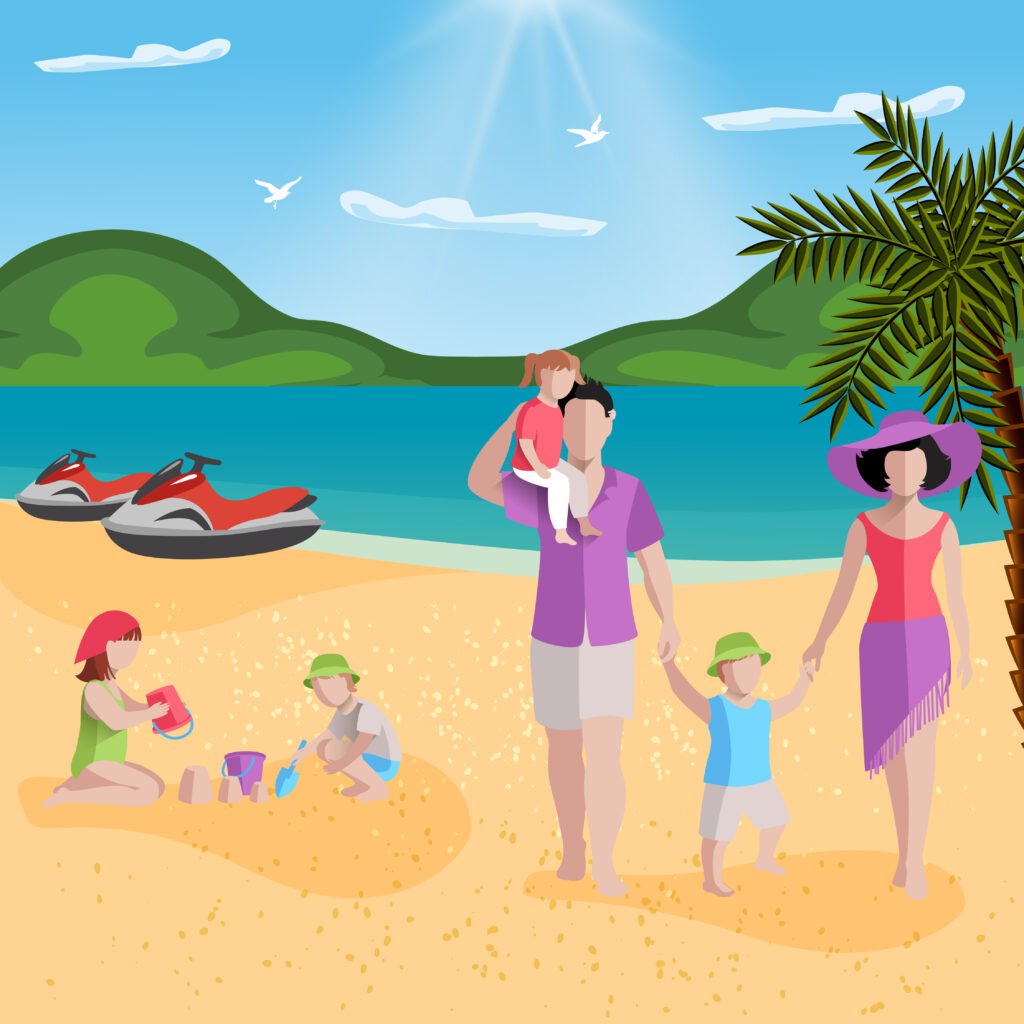
Why Do Some Families Choose Naturism?
Families approach naturism for different reasons. Their motivations may include personal comfort, cultural background, curiosity, or a desire to challenge unrealistic expectations about physical appearance.
It is important to remember that no single explanation applies to every naturist family.
1. Promoting a Healthier Attitude Toward Bodies
Modern media frequently presents edited photographs and narrow beauty standards. Children and adults may consequently develop unrealistic expectations about how bodies should look.
Some naturist families believe that seeing ordinary human bodies in non-sexual settings can help normalize natural differences, including scars, stretch marks, wrinkles, and changes associated with aging.
This experience does not automatically produce positive body image, but respectful conversations about physical diversity can help challenge harmful stereotypes.
2. Enjoying Outdoor Recreation
Naturist activities may take place at designated beaches, resorts, campsites, or other clothing-optional facilities.
Families who enjoy these environments may appreciate swimming, walking, relaxing outdoors, or spending time in nature without conventional clothing.
As with any recreational activity, the setting matters. Families should choose established locations with clear rules, appropriate facilities, and policies that protect children and other visitors.
3. Developing Open Communication
Some families use naturism as an opportunity to discuss bodies, privacy, and personal boundaries in a calm, age-appropriate way.
These conversations can help children understand that bodies are normal while also learning that privacy matters and that nobody is entitled to touch, photograph, or inspect another person’s body without permission.
Importantly, families can teach these lessons without practicing nudism. Open communication and child safety should never depend on adopting a particular lifestyle.
Potential Benefits of Family Naturism
The possible benefits of family nudism are best understood as personal experiences rather than guaranteed psychological or health outcomes.
| Potential benefit | What it may involve | Important consideration |
|---|---|---|
| Body acceptance | Becoming more familiar with natural body diversity | Experiences differ from person to person |
| Family communication | Discussing privacy, comfort, and boundaries | Conversations should be age-appropriate |
| Outdoor recreation | Enjoying swimming, walking, and nature | Sun protection and physical safety remain essential |
| Reduced appearance pressure | Challenging unrealistic beauty expectations | Naturism does not automatically resolve body-image concerns |
| Respect for differences | Recognizing that bodies change with age and life experiences | Every person’s dignity and preferences must be respected |
Building Body Confidence Without Unrealistic Expectations
One frequently mentioned reason for exploring naturism is the hope of developing a more balanced relationship with physical appearance.
In supportive environments, people may become less focused on comparing their bodies with idealized images. They may also become more comfortable discussing ordinary physical differences.
Nevertheless, families should avoid assuming that nudity is necessary for confidence. Positive body image can also be encouraged through respectful language, diverse media representation, healthy activities, and acceptance of individual preferences.
Encouraging Respect for Individual Differences
Family naturism can also create opportunities to discuss the fact that bodies vary naturally.
Age, genetics, disability, medical conditions, and ordinary life experiences can all influence physical appearance. Teaching children to approach these differences without ridicule is valuable in any household.
The goal should be mutual respect rather than pressuring family members to feel comfortable in every situation.
Essential Safety Rules for Family Nudism
Safety should be the first consideration for any family exploring a naturist environment. A family-friendly label alone does not guarantee that a location is suitable, so parents and guardians should investigate the venue and its policies.
1. Make Participation Voluntary
Every family member should be able to express discomfort without criticism or pressure.
Children should never be forced to undress, remain undressed, or participate in a naturist activity to satisfy an adult’s expectations. Their comfort may change over time, and those changes should be respected.
Adults should also recognize that relatives may have different preferences. A person who chooses to wear clothing should not be treated as less accepting or less committed to the family.
2. Teach Clear Personal Boundaries
Children need simple, understandable rules about their bodies and the bodies of others.
Useful principles include:
- Everyone has a right to personal space.
- Nobody should touch another person’s private areas except where necessary for appropriate care or medical treatment, handled according to safeguarding principles.
- Anyone can speak up when an interaction feels uncomfortable.
- Children can tell a trusted adult about unwanted attention without fear of punishment.
- Family membership or familiarity does not remove the need for consent and boundaries.
These principles apply in homes, schools, swimming pools, changing rooms, and every other environment.
3. Protect Children’s Privacy
Photography deserves particular attention in naturist settings.
Before taking photographs, check the venue’s rules and obtain the necessary permission from everyone who may appear in the image. Never assume that family relationships or attendance at a clothing-optional location constitute consent to photography.
Avoid sharing identifiable images of children in nude or otherwise vulnerable situations. Do not upload such images to social media, public websites, or messaging groups.
Parents should also be cautious about strangers who attempt to photograph children or disregard established privacy rules.
4. Choose Reputable, Family-Friendly Locations
Before visiting a naturist facility, review its written policies.
Look for clear rules covering:
- Child safeguarding and supervision.
- Photography and mobile devices.
- Appropriate conduct and harassment.
- Privacy and consent.
- Facilities, changing areas, and swimming safety.
- Reporting concerns or inappropriate behavior.
Families should leave any environment where people disregard boundaries or where the rules are unclear or inadequately enforced.
5. Follow Sun and Outdoor Safety Guidelines
Nudity increases the amount of exposed skin that may be vulnerable to sunburn. Families should use broad-spectrum sunscreen with an SPF of 30 or higher, reapply it according to the product instructions, and seek shade during periods of intense sunlight.
Hats, sunglasses, hydration, and appropriate supervision are also important. Sunscreen should not be considered a substitute for shade and other protective measures.
For swimming and other outdoor activities, follow ordinary water-safety precautions and the facility’s rules.
Understanding Laws and Cultural Differences
The legality of family nudism varies significantly between countries, regions, and individual locations.
Some jurisdictions permit nudity in designated naturist facilities or specific public areas. Others restrict public nudity or impose additional requirements concerning exposure, public behavior, and child protection.
A private property is not automatically exempt from every applicable law, and a clothing-optional venue may still have rules that visitors must follow.
Before planning a naturist outing, families should verify:
- Whether nudity is legally permitted at the intended location.
- Whether the venue expressly welcomes families with children.
- What restrictions apply to photography and recording.
- What conduct is prohibited by the facility.
- Whether local rules impose any additional obligations.
Cultural expectations also differ. In some communities, naturism is relatively familiar; in others, public or social nudity may be strongly discouraged or prohibited.
Respecting local customs and legal requirements is essential. Families should never assume that practices accepted in one country will be appropriate in another.
Common Misconceptions About Family Nudism
Misunderstandings about naturism often arise when people confuse ordinary non-sexual nudity with sexual behavior.
Several distinctions are worth understanding.
Misconception 1: All nudism is sexual.
Nudity and sexual activity are not the same thing. Naturist environments generally distinguish non-sexual recreational nudity from sexual behavior, which may be prohibited by venue rules and applicable law.
Misconception 2: Every family must agree to participate.
Healthy family relationships allow individual preferences. A relative who chooses to wear clothing or avoid naturist activities should have that choice respected.
Misconception 3: Naturism automatically improves body image.
Some people report feeling more comfortable with their bodies through naturist experiences, but outcomes vary. Body confidence can develop through many different approaches.
Misconception 4: Any clothing-optional location is appropriate for children.
This is not necessarily true. Families should examine safeguarding policies, supervision requirements, privacy rules, and the general suitability of a venue before visiting.
Misconception 5: Privacy rules are less important in a family setting.
Family relationships do not eliminate the need for consent. Respectful behavior, personal boundaries, and child protection remain essential.
How Families Can Explore Naturism Responsibly
For families who are curious about the lifestyle, a thoughtful approach is preferable to making immediate commitments.
Start by discussing the subject openly. Ask family members how they feel about the idea and explain the distinction between non-sexual naturism and sexual behavior.
Do not assume that a child who is curious about the topic necessarily wants to participate. Equally, do not shame a child for expressing discomfort.
Next, research local laws and established facilities. Read the venue’s policies carefully and contact its management if important questions remain unanswered.
Families may also explore body positivity through clothing-optional-free activities, such as swimming in ordinary facilities, spending time outdoors, reading educational materials about body diversity, and discussing respectful attitudes toward appearance.
These alternatives can provide many of the same opportunities for communication and self-acceptance without requiring anyone to participate in nudity.
The most important principle is to prioritize well-being over the label. A family does not need to identify as naturist to build an environment where bodies are treated respectfully and personal boundaries are taken seriously.
Frequently Asked Questions About Family Nudism
1. What does family nudist mean?
The term generally describes a family that participates in non-sexual nudist or naturist activities in appropriate settings. These activities may include visiting designated clothing-optional beaches, resorts, or other facilities. The emphasis should be on voluntary participation, mutual respect, privacy, and lawful behavior.
2. Is family nudism the same as family naturism?
The terms overlap considerably. Nudism usually emphasizes social or recreational nudity, while naturism may also emphasize nature, body acceptance, and a broader lifestyle philosophy. Their meanings can vary depending on the individual or organization using them.
3. Can family naturism help improve body confidence?
Some people find that naturist environments help them become more accepting of natural body differences. However, there is no guarantee that participating in naturism will improve body image. Confidence can also be developed through supportive relationships, healthy communication, and positive representation of different body types.
4. What safety precautions should families consider?
Families should prioritize voluntary participation, clear personal boundaries, child supervision, privacy, and protection against unwanted photography. They should also select reputable facilities with written safeguarding policies and follow all relevant laws and venue rules.
5. Is family nudism legal everywhere?
No. Laws concerning public nudity and clothing-optional activities differ between countries and local jurisdictions. Families should check the applicable law and confirm that a particular venue permits the intended activity before visiting.
6. Do families have to practice nudism to teach body positivity?
No. Parents can promote body acceptance by discussing natural physical differences, avoiding appearance-based criticism, respecting privacy, and encouraging children to appreciate their bodies without comparing themselves with unrealistic standards. These lessons are valuable regardless of a family’s clothing preferences.
Final Thoughts
Family nudism is a lifestyle that some people associate with body acceptance, outdoor recreation, and a more relaxed attitude toward non-sexual nudity. Understanding it requires separating common stereotypes from the practical realities of naturist activities.
For families considering this lifestyle, the most important factors are not the label or the level of clothing involved. They are consent, age-appropriate communication, privacy, personal boundaries, child protection, and compliance with local laws.
Naturism is not necessary for building a healthy family environment, and participation should never be treated as a requirement for acceptance. Families can encourage confidence, respect, and open communication in many different ways.
Ultimately, the healthiest approach is one that respects individual comfort, protects vulnerable family members, and recognizes that every person deserves dignity and privacy.
Also Read : Reality Steve Golden Bachelor: Spoilers, Predictions, Cast Updates, and What Fans Should Know









Leave a Reply